


Puzzles
Connections
Create four groups of four.
Easiest Toughest
How to play
- Find four groups of four words. The words in each group share something in intellectual property law: a doctrine, a kind of mark, a line of cases.
- Select four words and press Submit. A right group locks into place at the top.
- Each puzzle has one solution. Watch for words that seem to fit more than one group.
- You can make four mistakes. “One away” means three of your four belong together.
- When the game ends, every word opens onto the case behind it.
- FITS EVERYBODY
- GYMBULL
- TIFFANY BLUE
- HAYMARKET CHECK
- AIN’T LAURENT
- SKKN
- CROOSE
- DAMIER CANVAS
- LOUBOUTIN RED
- GLOW
- VALENTINO PINK
- IKB
- CHUCK TAYLOR
- ZORA
- RED POCKET TAB
- RHODE
The answers
The cases
Non-traditional colour trademarks and pigment IPTIFFANY BLUE · IKB · LOUBOUTIN RED · VALENTINO PINK
Single-colour marks protected as trademarks once they acquire secondary meaning, alongside an artist’s recorded pigment formula. Each gives a monochrome identity some exclusive commercial standing.
TIFFANY BLUEQualitex Co. v. Jacobson Products Co.
Qualitex Co. v. Jacobson Products Co., 514 U.S. 159 (1995)
Tiffany & Co. uses robin’s-egg blue on its packaging, earning trademark protection after a century of continuous use created secondary meaning, where consumers link a feature directly to one source. Under Qualitex, a single colour functions as a trademark once it achieves this distinct public association.
IKBINPI Soleau Envelope No. 63471
INPI Soleau Envelope No. 63471, (1960)
IKB (International Klein Blue) is an ultramarine shade formulated by Yves Klein in 1960 using a custom synthetic binder. Klein recorded his formula in a time-stamped Soleau envelope at the French IP office, proving priority without gaining a monopoly over the colour blue itself.
LOUBOUTIN REDChristian Louboutin S.A. v. Yves Saint Laurent Am. Holding, Inc.
Christian Louboutin S.A. v. Yves Saint Laurent Am. Holding, Inc., 696 F.3d 206 (2d Cir. 2012)
Christian Louboutin paints high-heel soles glossy red, and secured protection only where the sole contrasts with the rest of the shoe. Because Yves Saint Laurent’s monochrome red shoe had a matching red upper, it did not infringe: single-colour marks receive narrow protection.
VALENTINO PINKValentino S.p.A.
Valentino S.p.A., trade dress enforcement and custom Pantone protection
Valentino developed a signature hot pink (“Pink PP”) with Pantone for its 2022 collection and used it across products and displays. It shows the first step in building a non-traditional mark: an exclusive public association between one shade and one house.
Registered fashion trade dress and visual marksHAYMARKET CHECK · DAMIER CANVAS · RED POCKET TAB · CHUCK TAYLOR
Non-functional visual signatures, repeating fabric motifs, placement tags and footwear silhouettes protected as trade dress, because they tell shoppers where a product comes from.
HAYMARKET CHECKBurberry v. [unnamed Chinese sellers]
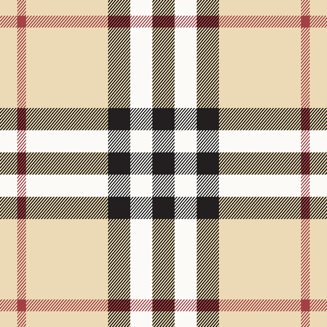
Burberry v. [unnamed Chinese sellers], Corte di Cassazione, Criminal Division (October 2020)
Burberry uses its tan, black, white and red check across scarves, coats and handbags. By enforcing the registered pattern against lookalike sellers, it showed that a repeating fabric motif can work as a fully enforceable trademark once registered.
DAMIER CANVASLouis Vuitton Malletier v. EUIPO
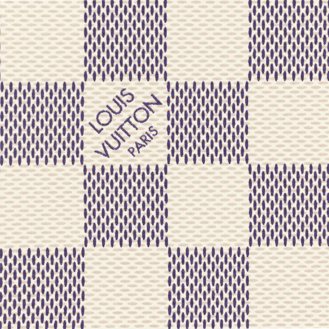
Louis Vuitton Malletier v. EUIPO, Case T-105/19 (General Court, 10 June 2020)
Louis Vuitton’s brown-and-beige chequerboard signals origin across its leather goods. But simple geometric patterns lack inherent distinctiveness, and Louis Vuitton could not prove that shoppers in every EU state recognised it as an exclusive mark.
RED POCKET TABLevi Strauss & Co. v. Blue Bell, Inc.
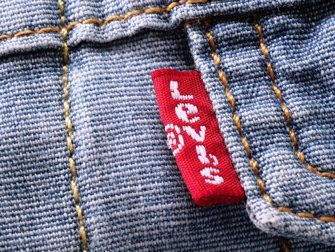
Levi Strauss & Co. v. Blue Bell, Inc., 632 F.2d 817 (9th Cir. 1980)
Levi’s protects the red fabric tab on its back pocket as registered trade dress, and blocks lookalike tabs under the dilution doctrine, which stops competitors weakening the fame of an iconic mark even when shoppers are not confused about who made the jeans.
CHUCK TAYLORConverse, Inc. v. International Trade Commission
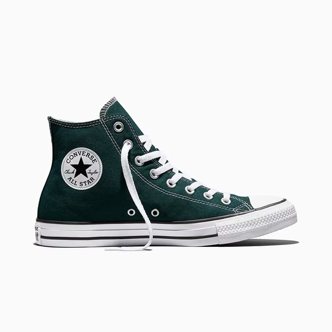
Converse, Inc. v. International Trade Commission, 909 F.3d 1110 (Fed. Cir. 2018)
Converse claimed the Chuck Taylor midsole, with its rubber toe cap, bumper and side stripes, as trade dress. The Federal Circuit held that Converse had to prove the design acquired secondary meaning before competitors began selling lookalikes.
Deceptive phonetic and visual similarity disputesZORA · GYMBULL · CROOSE · AIN’T LAURENT
Junior marks refused or restrained because changing a vowel, a prefix or a word still left them deceptively close in sound or look to an established mark, judged as a whole rather than letter by letter.
ZORAIndustria de Diseño Textil, S.A. (Zara) v. Registrar of Trade Marks

Objecting to “ZORA”, Zara’s parent company relied on the anti-dissection rule, which looks at a mark’s overall commercial impression rather than letter by letter. Swapping one vowel does not avoid confusion when the overall look and sound stay the same.
GYMBULLGymshark Ltd. v. Abdulwahed Bin Shabib Distribution (“GymBull”)
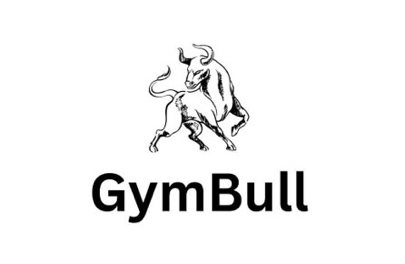
Gymshark Ltd. v. Abdulwahed Bin Shabib Distribution (“GymBull”), UKIPO Decision O/0469/26
Gymshark opposed the registration of “GymBull”, a newer line with a similar name and animal motif. The UK Intellectual Property Office refused the mark, finding the overall impression confusingly similar and the application made in bad faith to exploit Gymshark’s goodwill.
CROOSECrocs Inc. v. Registrar of Trade Marks

Crocs Inc. v. Registrar of Trade Marks, C.O. (COMM.IPD-TM) 82/2023 (Delhi HC)
Crocs challenged a brand selling clogs as “CROOSE”, pointing out that the two names sound almost identical aloud. Indian courts block junior marks when visual or phonetic resemblance makes consumer confusion about origin likely.
AIN’T LAURENTYves Saint Laurent v. What About Yves
Yves Saint Laurent v. What About Yves, (S.D.N.Y. 2015; settled and dismissed January 2016)
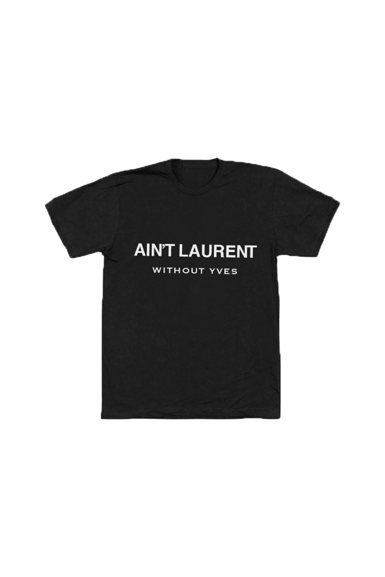
The parody label What About Yves sold T-shirts reading “Ain’t Laurent Without Yves”. Yves Saint Laurent sued for infringement, alleging free riding: unfairly trading on an established brand’s prestige for commercial gain.
Celebrity “reverse confusion” suitsRHODE · SKKN · FITS EVERYBODY · GLOW
Reverse confusion: a small senior user is swamped by a famous junior entrant, so shoppers come to think the original is the imitator.
RHODERhode-NYC LLC v. RHODE US LLC

Rhode-NYC LLC v. RHODE US LLC, No. 1:22-cv-05185 (S.D.N.Y. 2022)
When Hailey Bieber launched her Rhode skincare line, a fashion label using the registered mark since 2014 sued, arguing that her celebrity reach drowned out its identity and made consumers assume the original label was the spin-off.
SKKNBeauty Concepts LLC v. Kardashian
Beauty Concepts LLC v. Kardashian, No. 1:22-cv-03797 (E.D.N.Y. 2022)
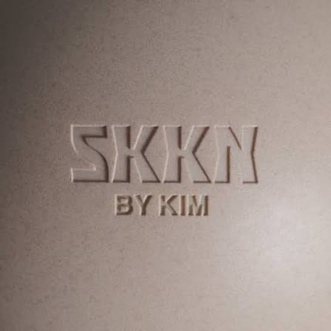
When Kim Kardashian rebranded as SKKN BY KIM, the Brooklyn salon SKKN+ sued, alleging that her social media reach swamped search results and made the original salon look like an unauthorised imitator.
FITS EVERYBODYFits Every Body To A T, Inc. v. Skims Body, Inc.
Fits Every Body To A T, Inc. v. Skims Body, Inc., No. 1:26-cv-02660 (S.D.N.Y. 2026)
The apparel boutique Fits Every Body To A T sued Kim Kardashian’s SKIMS over its “Fits Everybody” line, alleging that SKIMS’ marketing overwhelmed its prior rights and led shoppers to assume the boutique had copied SKIMS.
GLOWGlow Industries, Inc. v. Lopez
Glow Industries, Inc. v. Lopez, 273 F. Supp. 2d 1095 (C.D. Cal. 2003)
A cosmetics company selling GLOW products since 1999 sued Jennifer Lopez over her Glow by J.Lo fragrance, a classic reverse confusion suit: her marketing swamped the market and buyers took the original line for a J.Lo spin-off.
The cases
Non-traditional colour trademarks and pigment IPTIFFANY BLUE · IKB · LOUBOUTIN RED · VALENTINO PINK
Single-colour marks protected as trademarks once they acquire secondary meaning, alongside an artist’s recorded pigment formula. Each gives a monochrome identity some exclusive commercial standing.
TIFFANY BLUEQualitex Co. v. Jacobson Products Co.
Qualitex Co. v. Jacobson Products Co., 514 U.S. 159 (1995)
Tiffany & Co. uses robin’s-egg blue on its packaging, earning trademark protection after a century of continuous use created secondary meaning, where consumers link a feature directly to one source. Under Qualitex, a single colour functions as a trademark once it achieves this distinct public association.
IKBINPI Soleau Envelope No. 63471
INPI Soleau Envelope No. 63471, (1960)
IKB (International Klein Blue) is an ultramarine shade formulated by Yves Klein in 1960 using a custom synthetic binder. Klein recorded his formula in a time-stamped Soleau envelope at the French IP office, proving priority without gaining a monopoly over the colour blue itself.
LOUBOUTIN REDChristian Louboutin S.A. v. Yves Saint Laurent Am. Holding, Inc.
Christian Louboutin S.A. v. Yves Saint Laurent Am. Holding, Inc., 696 F.3d 206 (2d Cir. 2012)
Christian Louboutin paints high-heel soles glossy red, and secured protection only where the sole contrasts with the rest of the shoe. Because Yves Saint Laurent’s monochrome red shoe had a matching red upper, it did not infringe: single-colour marks receive narrow protection.
VALENTINO PINKValentino S.p.A.
Valentino S.p.A., trade dress enforcement and custom Pantone protection
Valentino developed a signature hot pink (“Pink PP”) with Pantone for its 2022 collection and used it across products and displays. It shows the first step in building a non-traditional mark: an exclusive public association between one shade and one house.
Registered fashion trade dress and visual marksHAYMARKET CHECK · DAMIER CANVAS · RED POCKET TAB · CHUCK TAYLOR
Non-functional visual signatures, repeating fabric motifs, placement tags and footwear silhouettes protected as trade dress, because they tell shoppers where a product comes from.
HAYMARKET CHECKBurberry v. [unnamed Chinese sellers]
Burberry v. [unnamed Chinese sellers], Corte di Cassazione, Criminal Division (October 2020)
Burberry uses its tan, black, white and red check across scarves, coats and handbags. By enforcing the registered pattern against lookalike sellers, it showed that a repeating fabric motif can work as a fully enforceable trademark once registered.
DAMIER CANVASLouis Vuitton Malletier v. EUIPO
Louis Vuitton Malletier v. EUIPO, Case T-105/19 (General Court, 10 June 2020)
Louis Vuitton’s brown-and-beige chequerboard signals origin across its leather goods. But simple geometric patterns lack inherent distinctiveness, and Louis Vuitton could not prove that shoppers in every EU state recognised it as an exclusive mark.
RED POCKET TABLevi Strauss & Co. v. Blue Bell, Inc.
Levi Strauss & Co. v. Blue Bell, Inc., 632 F.2d 817 (9th Cir. 1980)
Levi’s protects the red fabric tab on its back pocket as registered trade dress, and blocks lookalike tabs under the dilution doctrine, which stops competitors weakening the fame of an iconic mark even when shoppers are not confused about who made the jeans.
CHUCK TAYLORConverse, Inc. v. International Trade Commission
Converse, Inc. v. International Trade Commission, 909 F.3d 1110 (Fed. Cir. 2018)
Converse claimed the Chuck Taylor midsole, with its rubber toe cap, bumper and side stripes, as trade dress. The Federal Circuit held that Converse had to prove the design acquired secondary meaning before competitors began selling lookalikes.
Deceptive phonetic and visual similarity disputesZORA · GYMBULL · CROOSE · AIN’T LAURENT
Junior marks refused or restrained because changing a vowel, a prefix or a word still left them deceptively close in sound or look to an established mark, judged as a whole rather than letter by letter.
ZORAIndustria de Diseño Textil, S.A. (Zara) v. Registrar of Trade Marks
Objecting to “ZORA”, Zara’s parent company relied on the anti-dissection rule, which looks at a mark’s overall commercial impression rather than letter by letter. Swapping one vowel does not avoid confusion when the overall look and sound stay the same.
GYMBULLGymshark Ltd. v. Abdulwahed Bin Shabib Distribution (“GymBull”)
Gymshark Ltd. v. Abdulwahed Bin Shabib Distribution (“GymBull”), UKIPO Decision O/0469/26
Gymshark opposed the registration of “GymBull”, a newer line with a similar name and animal motif. The UK Intellectual Property Office refused the mark, finding the overall impression confusingly similar and the application made in bad faith to exploit Gymshark’s goodwill.
CROOSECrocs Inc. v. Registrar of Trade Marks
Crocs Inc. v. Registrar of Trade Marks, C.O. (COMM.IPD-TM) 82/2023 (Delhi HC)
Crocs challenged a brand selling clogs as “CROOSE”, pointing out that the two names sound almost identical aloud. Indian courts block junior marks when visual or phonetic resemblance makes consumer confusion about origin likely.
AIN’T LAURENTYves Saint Laurent v. What About Yves
Yves Saint Laurent v. What About Yves, (S.D.N.Y. 2015; settled and dismissed January 2016)
The parody label What About Yves sold T-shirts reading “Ain’t Laurent Without Yves”. Yves Saint Laurent sued for infringement, alleging free riding: unfairly trading on an established brand’s prestige for commercial gain.
Celebrity “reverse confusion” suitsRHODE · SKKN · FITS EVERYBODY · GLOW
Reverse confusion: a small senior user is swamped by a famous junior entrant, so shoppers come to think the original is the imitator.
RHODERhode-NYC LLC v. RHODE US LLC
Rhode-NYC LLC v. RHODE US LLC, No. 1:22-cv-05185 (S.D.N.Y. 2022)
When Hailey Bieber launched her Rhode skincare line, a fashion label using the registered mark since 2014 sued, arguing that her celebrity reach drowned out its identity and made consumers assume the original label was the spin-off.
SKKNBeauty Concepts LLC v. Kardashian
Beauty Concepts LLC v. Kardashian, No. 1:22-cv-03797 (E.D.N.Y. 2022)
When Kim Kardashian rebranded as SKKN BY KIM, the Brooklyn salon SKKN+ sued, alleging that her social media reach swamped search results and made the original salon look like an unauthorised imitator.
FITS EVERYBODYFits Every Body To A T, Inc. v. Skims Body, Inc.
Fits Every Body To A T, Inc. v. Skims Body, Inc., No. 1:26-cv-02660 (S.D.N.Y. 2026)
The apparel boutique Fits Every Body To A T sued Kim Kardashian’s SKIMS over its “Fits Everybody” line, alleging that SKIMS’ marketing overwhelmed its prior rights and led shoppers to assume the boutique had copied SKIMS.
GLOWGlow Industries, Inc. v. Lopez
Glow Industries, Inc. v. Lopez, 273 F. Supp. 2d 1095 (C.D. Cal. 2003)
A cosmetics company selling GLOW products since 1999 sued Jennifer Lopez over her Glow by J.Lo fragrance, a classic reverse confusion suit: her marketing swamped the market and buyers took the original line for a J.Lo spin-off.